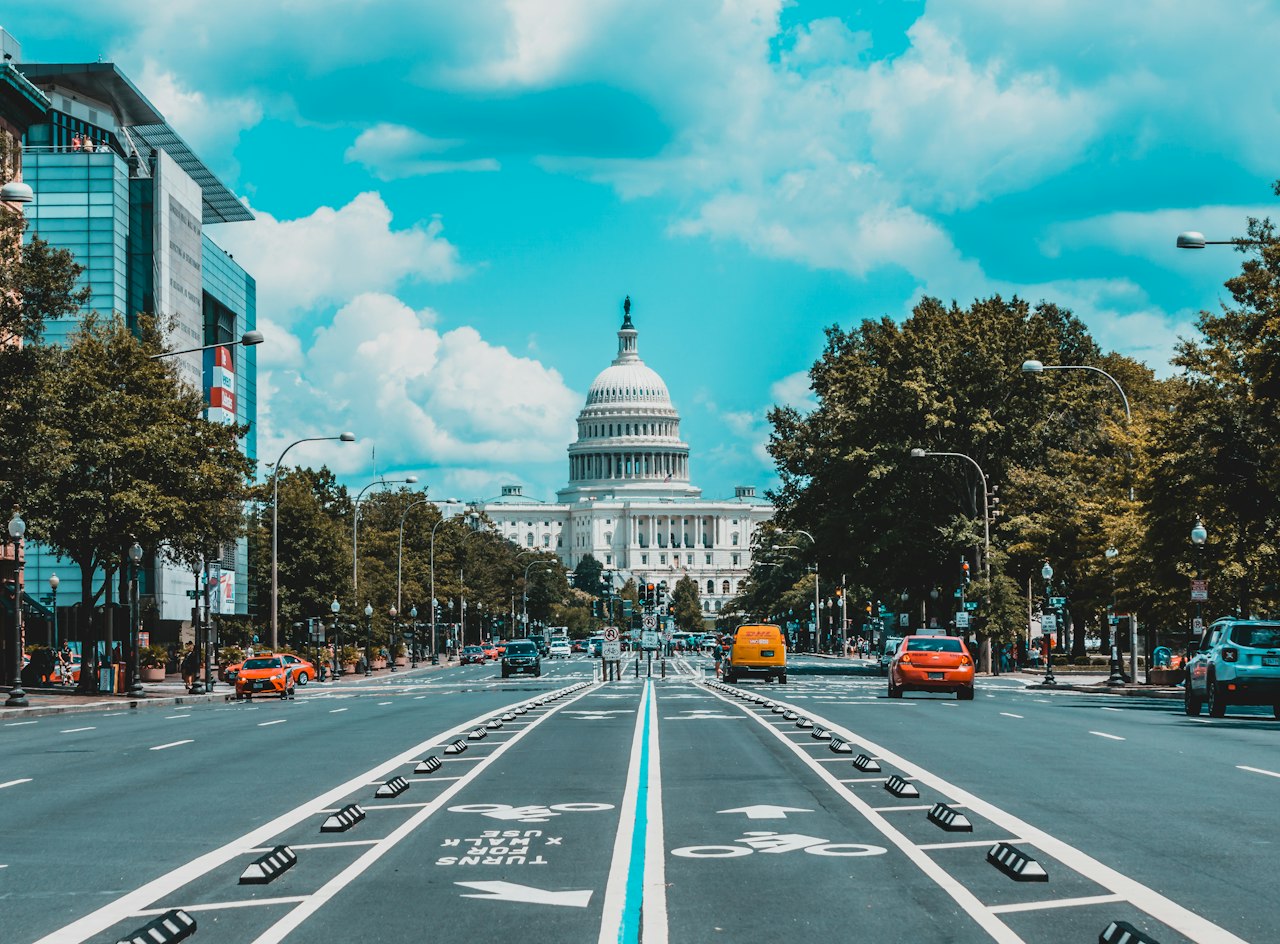
Washington DC, 1952: UFOs Over the Capitol and the Cover That Didn't Hold
In the summer of 1952, the United States government held its largest press conference since the end of World War II. The subject was UFOs over the nation's capital. The explanation offered was temperature inversions. The radar operators did not accept it.
In the summer of 1952, the United States government held its largest press conference since the end of World War II. The subject was UFOs over the nation's capital.
The explanation offered was temperature inversions. The radar operators who tracked the objects did not accept it.
Two Weekends in July
On the night of July 19, 1952, radar operators at Washington National Airport and at Andrews Air Force Base began tracking a cluster of unknown objects moving over restricted airspace above the Capitol building and the White House. The objects were not moving like aircraft. They accelerated abruptly, made sharp turns, and in some instances stopped entirely before resuming movement.
Civilian pilots in the area reported visual contact with bright lights that matched the radar returns. Air Force interceptors were scrambled. By the time the jets arrived, the objects had disappeared. When the jets left the area, the objects returned. This happened more than once.
On July 26, exactly one week later, it happened again. The radar returns were stronger and more numerous. Multiple independent radar systems at different locations tracked the same objects simultaneously. Interceptors were scrambled again. Pilots reported visual confirmation of lights. The objects again outmaneuvered the jets.
"We have no natural explanation for this."
— Air Force Captain Edward Ruppelt, head of Project Blue Book, on the Washington sightings
The Press Conference
The scale of the public reaction forced a response. On July 29, Major General John Samford of the Air Force held a press conference that ran for nearly two hours. It was the most significant official UFO-related press conference in American history up to that point.
Samford's explanation was temperature inversions, a meteorological phenomenon that can cause radar to bounce off warm air layers and produce false returns. It can also cause optical distortions that produce the appearance of lights in the sky.
Temperature inversions are real. They are also well understood by radar operators. The men tracking the Washington objects in 1952 were experienced professionals who knew what temperature inversions looked like on their equipment. Several went on record stating that what they tracked that summer was not a radar ghost.
Edward Ruppelt, the head of Project Blue Book who was investigating the sightings in real time, later wrote that Samford's temperature inversion explanation "didn't explain a thing."
What the Radar Evidence Actually Shows
The Washington sightings are notable specifically because of the multiple independent radar confirmations. When a single radar system produces anomalous returns, the equipment or operator error argument is plausible. When three separate radar systems at different locations track the same objects simultaneously, and when visual witnesses in the air report seeing lights that correspond to those radar returns, the equipment error argument becomes significantly harder to sustain.
Capt. S.C. Pierman, a Capital Airlines pilot who had visual contact with the objects on the night of July 19, gave a specific account of watching lights maneuver in ways that no conventional aircraft could. He watched them for extended periods from his cockpit. He was not a casual observer.
Multiple independent radar returns, airborne visual confirmation, and experienced radar operators on the record saying what they tracked was not a false return. The temperature inversion explanation accounts for none of this.
The Policy That Followed
The Washington flap of 1952 had a direct institutional consequence. In January 1953, the CIA convened the Robertson Panel, a group of scientists tasked with evaluating the UFO situation. The panel's classified conclusions included a recommendation that the Air Force pursue a policy of actively debunking UFO reports to reduce public interest in the subject.
The Robertson Panel recommended that civilian UFO organizations be monitored and that the Air Force work to reduce the credibility of UFO witnesses. This was not a conspiracy theory. It was a declassified government recommendation that became policy.
Understanding the Washington flap of 1952 is part of understanding why official skepticism about this subject has always felt, to credible witnesses, like something more than honest disbelief.
Go Deeper
Get the weekly PILLARS briefing. Research drops, case file updates, and stories that don't make the homepage.